Instagram Influencer Marketing Guide 2026
Instagram influencer marketing has transformed the digital advertising landscape and become one of the most effective strategies for brands worldwide. Businesses of every size now collaborate with creators, celebrities, industry experts, and niche content producers to connect with audiences in a more authentic and engaging way. Instead of relying entirely on traditional advertising methods, companies increasingly use influencers to build trust, improve brand visibility, and drive purchasing decisions.
The growth of Instagram Reels, creator-driven commerce, and social shopping has accelerated the importance of influencer marketing across industries such as fashion, fitness, beauty, technology, finance, travel, education, gaming, and health. Consumers now spend hours daily engaging with creators whose opinions and recommendations strongly influence buying behavior.
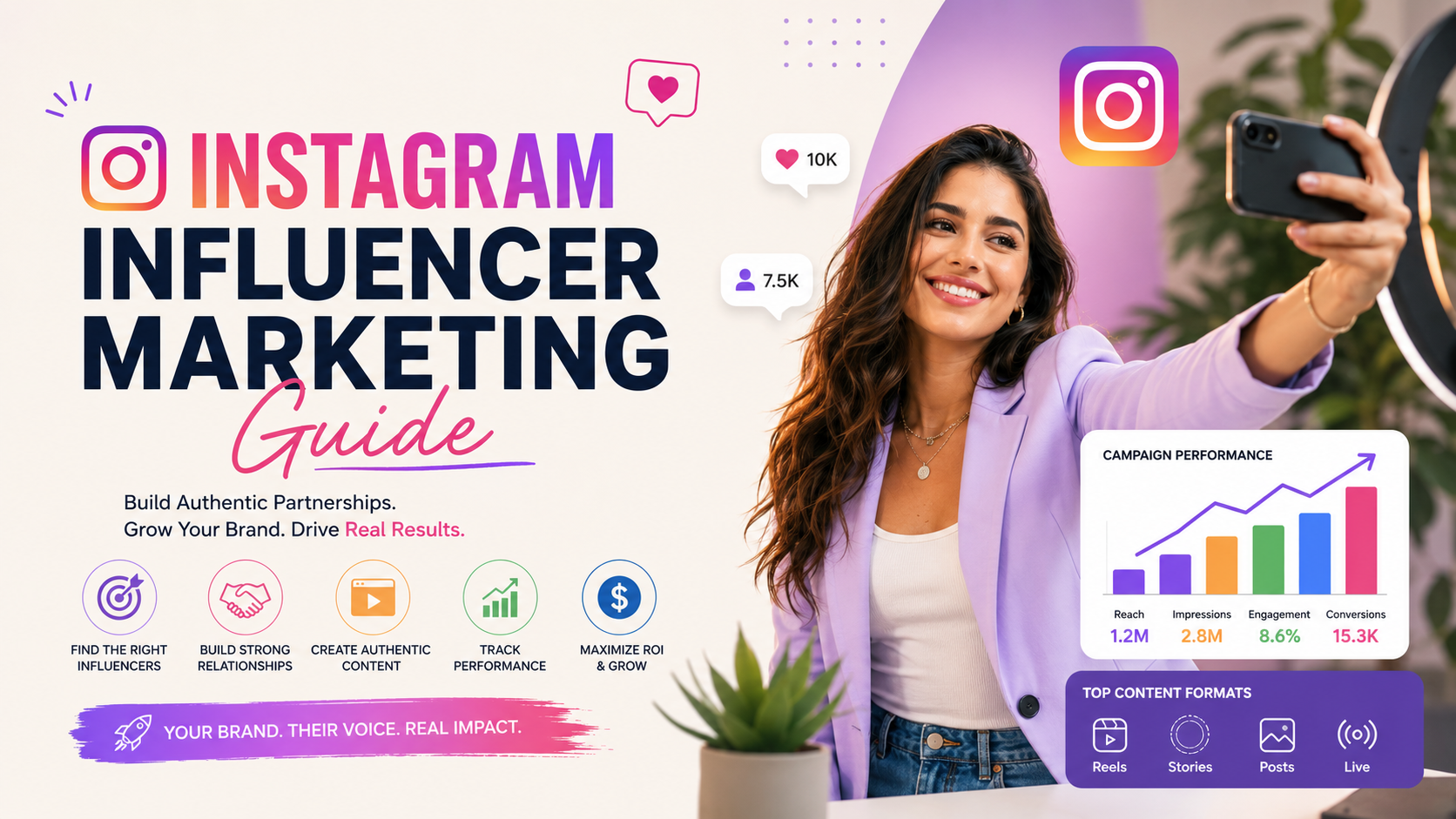
This comprehensive Instagram Influencer Marketing Guide explains how influencer marketing works, why it matters, how businesses can build successful campaigns, and how creators can monetize their audiences effectively. Whether you are a business owner, marketer, startup founder, agency professional, or aspiring influencer, this guide provides practical insights and actionable strategies to help you succeed in the modern creator economy.
What Is Instagram Influencer Marketing?
Instagram influencer marketing is a digital marketing strategy where businesses collaborate with influencers to promote products, services, or brands through Instagram content. Influencers are individuals who have built loyal audiences based on expertise, entertainment, creativity, or lifestyle content.
Unlike traditional advertisements, influencer marketing focuses on authentic communication between creators and followers. Audiences often trust influencers because they feel relatable, credible, and community-driven. This trust helps brands generate stronger engagement and higher conversion rates.
Instagram influencers usually create promotional content through:
-
Sponsored posts
-
Instagram Reels
-
Stories
-
Live sessions
-
Product reviews
-
Tutorials
-
Giveaways
-
Affiliate promotions
Influencers are commonly categorized into several groups:
|
Influencer Type |
Follower Range |
|
Nano Influencers |
1K–10K |
|
Micro Influencers |
10K–100K |
|
Mid-Tier Influencers |
100K–500K |
|
Macro Influencers |
500K–1M |
|
Mega Influencers |
1M+ |
Businesses choose influencers based on campaign goals, audience demographics, engagement rates, and industry relevance.
Why Instagram Influencer Marketing Matters
Instagram influencer marketing matters because consumer behavior has fundamentally changed in the digital era. Modern audiences trust peer recommendations and creator-driven content more than traditional advertisements. Social media platforms have become major discovery channels where consumers learn about products, services, and trends before making purchasing decisions.
Instagram, in particular, offers powerful visual storytelling features that help brands connect emotionally with audiences. Influencer marketing delivers measurable business outcomes while maintaining a more authentic communication style.
The importance of influencer marketing continues growing because it helps businesses:
-
Reach targeted audiences
-
Increase brand awareness
-
Improve audience engagement
-
Generate sales and conversions
-
Build consumer trust
-
Expand social proof
-
Strengthen brand credibility
For creators, influencer marketing provides opportunities to:
-
Monetize audiences
-
Build personal brands
-
Launch businesses
-
Collaborate with global companies
-
Create long-term income streams
As social commerce expands globally, influencer marketing is expected to remain a central component of digital advertising strategies.
How Instagram Influencer Marketing Works
Instagram influencer marketing works by connecting brands with creators whose audiences align with the company’s target market. Businesses identify suitable influencers, negotiate campaign terms, and collaborate on promotional content that feels authentic and engaging.
The process generally involves several stages:
Audience Research
Brands first identify their target audience and understand customer behavior, interests, age groups, and purchasing habits.
Influencer Selection
Businesses analyze influencers based on:
-
Engagement rate
-
Audience demographics
-
Content quality
-
Brand compatibility
-
Audience authenticity
-
Past campaign performance
Campaign Planning
Campaign goals may include:
-
Product launches
-
Website traffic generation
-
App downloads
-
Sales growth
-
Brand awareness
-
Event promotion
Content Creation
Influencers produce branded content using their personal style and storytelling methods to maintain audience trust.
Performance Tracking
Brands monitor metrics such as:
-
Reach
-
Impressions
-
Engagement
-
Click-through rates
-
Conversion rates
-
Return on investment (ROI)
This performance-focused structure makes influencer marketing highly measurable compared to traditional advertising methods.
Key Features of Instagram Influencer Marketing
Instagram influencer marketing includes several advanced features that make it highly effective for modern businesses. These features combine creativity, analytics, audience targeting, and visual storytelling.
Visual Content Marketing
Instagram is a visually driven platform where high-quality photos, videos, and reels attract strong audience engagement. Influencers use storytelling techniques to make promotional content entertaining and informative.
Audience Engagement
Influencers build communities rather than passive audiences. Followers actively interact through likes, comments, shares, polls, and direct messages.
Targeted Demographics
Brands can partner with influencers who attract specific customer groups based on:
-
Age
-
Location
-
Gender
-
Interests
-
Income level
-
Lifestyle preferences
Multi-Format Content Options
Instagram supports multiple promotional formats including:
-
Reels
-
Stories
-
Carousel posts
-
Live videos
-
Guides
-
Broadcast channels
Real-Time Analytics
Businesses can track campaign performance instantly through engagement metrics and conversion data.
Benefits and Advantages of Instagram Influencer Marketing
Instagram influencer marketing provides major benefits for businesses, creators, and consumers. The strategy combines trust-based communication with measurable digital performance.
Advantages for Businesses
Businesses increasingly prioritize influencer campaigns because they provide stronger engagement and audience relevance than many traditional advertisements.
Improved Brand Awareness
Influencers introduce brands to highly engaged audiences that may not respond to conventional ads.
Better Conversion Rates
Consumers are more likely to purchase products recommended by trusted creators.
Cost-Effective Advertising
Compared to television advertising or large-scale media campaigns, influencer collaborations often deliver higher ROI.
Enhanced Social Proof
Brand mentions from respected influencers improve credibility and trust.
Advantages for Influencers
Creators benefit financially and professionally from influencer marketing opportunities.
Multiple Revenue Streams
Influencers earn income from:
-
Sponsorships
-
Affiliate marketing
-
Merchandise sales
-
Subscription content
-
Brand ambassadorships
Personal Brand Growth
Creators can establish authority within specific industries or niches.
Business Expansion Opportunities
Many influencers launch businesses, courses, products, or consulting services.
Real-World Example of Instagram Influencer Marketing
A strong example of successful influencer marketing is the collaboration between beauty brands and makeup creators. When a cosmetics company launches a new product, influencers demonstrate product usage through tutorials, reviews, and before-and-after transformations.
For instance, beauty influencers frequently create:
-
Makeup tutorials
-
Product reviews
-
Skincare routines
-
Comparison videos
-
Product testing reels
This content feels more relatable and trustworthy than traditional advertisements because audiences see real usage experiences.
Similarly, fitness influencers often collaborate with nutrition brands, sportswear companies, and wellness apps. Their audiences trust recommendations because the products align naturally with their lifestyle and expertise.
These examples demonstrate how authenticity and niche relevance drive successful influencer campaigns.
Recommended Usage Guidelines
Businesses and creators should follow strategic guidelines to maximize campaign performance and maintain audience trust.
Focus on Authenticity
Authentic content performs significantly better than overly scripted advertisements. Audiences can quickly detect forced promotions.
Choose Relevant Influencers
Brands should prioritize audience alignment over follower count alone.
Set Clear Campaign Goals
Campaign objectives should include measurable targets such as:
-
Engagement growth
-
Sales conversions
-
Website traffic
-
Brand awareness
Encourage Creative Freedom
Influencers understand their audiences better than brands. Allowing creative flexibility improves campaign authenticity.
Track Campaign Analytics
Monitor key performance indicators consistently to optimize future campaigns.
Common Mistakes to Avoid
Many businesses and influencers make avoidable mistakes that reduce campaign performance and damage credibility.
Choosing Influencers Based Only on Followers
Large follower counts do not always guarantee strong engagement or conversions.
Ignoring Fake Followers
Some accounts artificially inflate follower numbers through bots or purchased audiences.
Overloading Sponsored Content
Too many advertisements can reduce audience trust and engagement.
Poor Communication
Unclear expectations between brands and influencers may lead to ineffective campaigns.
Lack of Performance Analysis
Businesses that fail to track campaign results cannot accurately measure ROI.
Who Should Use Instagram Influencer Marketing?
Instagram influencer marketing is valuable for businesses, entrepreneurs, startups, creators, agencies, and nonprofits.
Small Businesses
Small brands can use micro influencers to reach local or niche audiences affordably.
E-Commerce Brands
Online stores benefit significantly from influencer-driven product promotions.
Startups
Startups use influencer marketing to gain rapid visibility and social proof.
Content Creators
Aspiring influencers build authority and monetize their expertise through partnerships.
Marketing Agencies
Agencies manage influencer relationships and campaign strategies for clients.
Step-by-Step Guide to Using Instagram Influencer Marketing
Building a successful influencer marketing campaign requires strategic planning and execution.
Step 1: Define Campaign Goals
Clearly identify what the campaign should achieve:
-
Sales
-
Leads
-
Downloads
-
Brand awareness
-
Community growth
Step 2: Identify Your Target Audience
Understand customer demographics, interests, and behavior patterns.
Step 3: Research Suitable Influencers
Analyze:
-
Engagement rates
-
Audience quality
-
Content style
-
Niche relevance
Step 4: Establish Collaboration Terms
Discuss deliverables, timelines, compensation, and campaign expectations.
Step 5: Create Engaging Content
Encourage authentic storytelling and natural product integration.
Step 6: Launch and Monitor Campaign
Track analytics in real time to optimize performance.
Step 7: Measure Results
Evaluate success using metrics such as:
-
Reach
-
Conversions
-
Engagement
-
ROI
-
Click-through rates
Long-Tail Keyword Applications
Long-tail keywords improve SEO visibility and help businesses attract highly targeted traffic. Incorporating these naturally into content improves ranking opportunities and audience relevance.
Examples of valuable long-tail keywords include:
|
Long-Tail Keyword |
User Intent |
|
best Instagram influencer marketing guide |
Informational |
|
how to run Instagram influencer campaigns |
Educational |
|
influencer marketing strategy for small business |
Commercial |
|
Instagram influencer marketing tips for beginners |
Learning |
|
affordable Instagram influencers for startups |
Purchase research |
|
influencer marketing ROI tracking methods |
Analytical |
|
Instagram Reels influencer marketing strategy |
Content optimization |
|
how brands work with Instagram influencers |
Brand research |
Data Analysis and Performance Insights
Data analytics plays a major role in influencer marketing success. Businesses increasingly rely on measurable metrics instead of assumptions when evaluating campaign effectiveness.
Important Performance Metrics
The most critical influencer marketing KPIs include:
-
Engagement rate
-
Reach
-
Impressions
-
Audience retention
-
Conversion rate
-
Click-through rate
-
Story completion rate
Statistics Table: Influencer Marketing Industry Growth
|
Year |
Global Influencer Marketing Market Size |
|
2021 |
$13.8 Billion |
|
2022 |
$16.4 Billion |
|
2023 |
$21.1 Billion |
|
2024 |
$24.0 Billion |
|
2025 |
$28.5 Billion |
|
2026 (Projected) |
$32.4 Billion |
Graph-Style Data Table: Campaign Performance Metrics
|
Metric |
Performance Level |
|
Audience Engagement |
██████████ 9/10 |
|
Brand Awareness |
██████████ 9/10 |
|
Sales Conversion |
████████ 7/10 |
|
Audience Trust |
██████████ 10/10 |
|
Cost Efficiency |
████████ 8/10 |
|
Long-Term Branding |
█████████ 8/10 |
These insights demonstrate why influencer marketing continues growing as a preferred digital advertising strategy.
Comparison Table: Influencer Marketing vs Traditional Advertising
Businesses often compare influencer marketing with traditional advertising methods when planning campaigns.
|
Feature |
Influencer Marketing |
Traditional Advertising |
|
Audience Trust |
High |
Moderate |
|
Engagement Rate |
Strong |
Lower |
|
Targeting Precision |
Excellent |
Moderate |
|
Cost Flexibility |
Flexible |
Expensive |
|
Content Authenticity |
High |
Limited |
|
Real-Time Analytics |
Available |
Limited |
|
Conversion Tracking |
Advanced |
Moderate |
This comparison highlights why businesses increasingly allocate larger budgets to creator-driven campaigns.
Conclusion
Instagram influencer marketing has become one of the most powerful digital marketing strategies in the modern business world. As consumers increasingly rely on social media recommendations, brands must adapt to creator-driven communication models that prioritize authenticity, trust, and engagement.
Successful influencer campaigns require strategic planning, audience understanding, creative storytelling, and performance analysis. Businesses that focus on genuine partnerships and measurable objectives are more likely to achieve sustainable growth and stronger customer relationships.
At the same time, influencers continue evolving into entrepreneurs, educators, entertainers, and trusted industry voices. The creator economy is expected to expand significantly in the coming years, making influencer marketing an essential component of future digital advertising strategies.
Whether you are launching a startup, growing an e-commerce brand, building a personal brand, or managing marketing campaigns, understanding Instagram influencer marketing can provide a major competitive advantage.
Strong Call-to-Action
Ready to grow your brand through Instagram influencer marketing?
Start by identifying your ideal audience, researching relevant influencers, and creating authentic campaigns that inspire engagement and trust. Whether you are a business seeking better conversions or a creator building a profitable personal brand, influencer marketing offers powerful opportunities for long-term digital success.
Begin implementing your Instagram influencer marketing strategy today and position your brand for sustainable growth in the evolving creator economy.